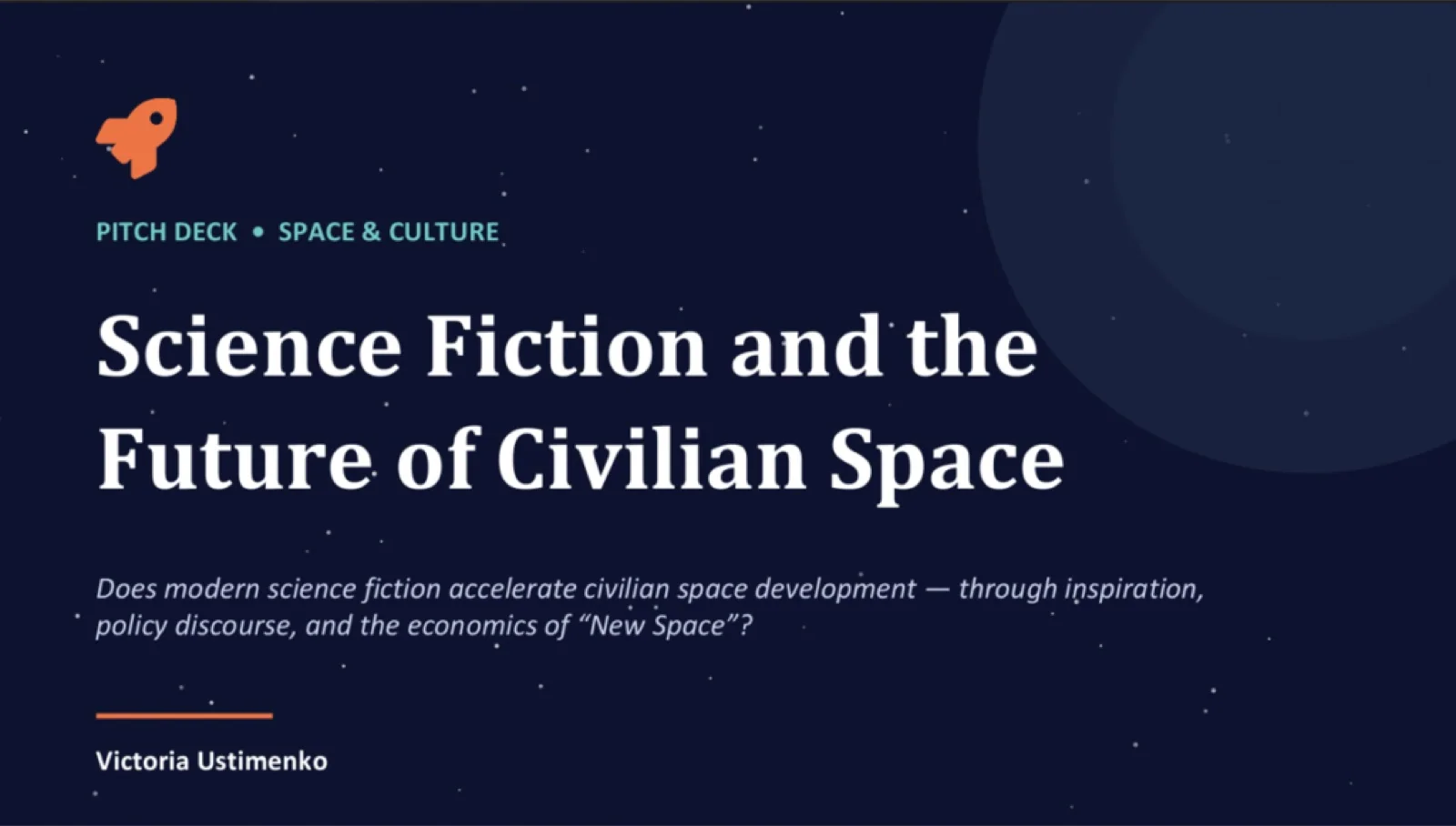
 A speech of Victoria Ustimenko during SRI IV World Congress.
Ladies and gentlemen,
Let me start with a question. How many of you can name the engineer who designed the first liquid-fuel rocket? Now — how many of you can name the fictional captain who first said "Warp factor nine"?
I suspect the second question was easier. And that gap, that asymmetry between what we remember from the history of engineering and what we remember from the history of imagination, is exactly why we are here today. Because the truth is this: long before rockets left the ground, they had already left the page.
Fiction before fact
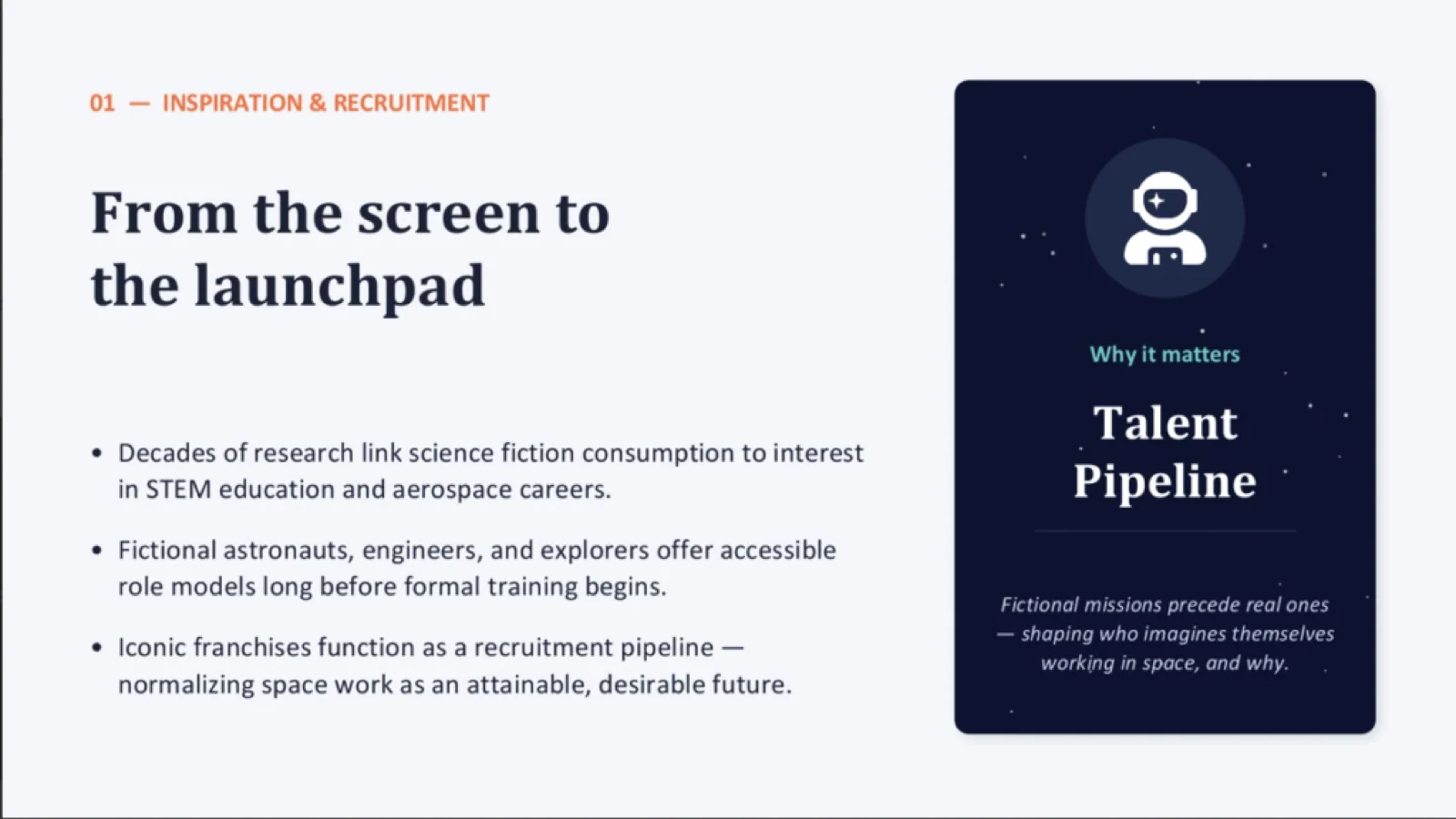
Konstantin Tsiolkovsky, the father of astronautics, said openly that his equations were inspired by Jules Verne. Wernher von Braun grew up reading Hermann Oberth's speculative writing on spaceflight. A generation of NASA engineers has said, on record, that they went into aerospace because of Star Trek. Even the flip-open communicator in your pocket right now traces its design lineage back to a prop built for a 1960s television show.
This is not nostalgia. This is causality. Fiction did not simply decorate the space age — in many cases, it preceded it, imagined it, and made it desirable before it was possible.
Why fiction moves faster than engineering
Science fiction has one enormous advantage over the space industry: it does not need a budget approval, a safety review, or a physics breakthrough to imagine the future. A novelist can put a colony on Mars in an afternoon. A studio can film a warp drive next month. Engineers, understandably, need decades.
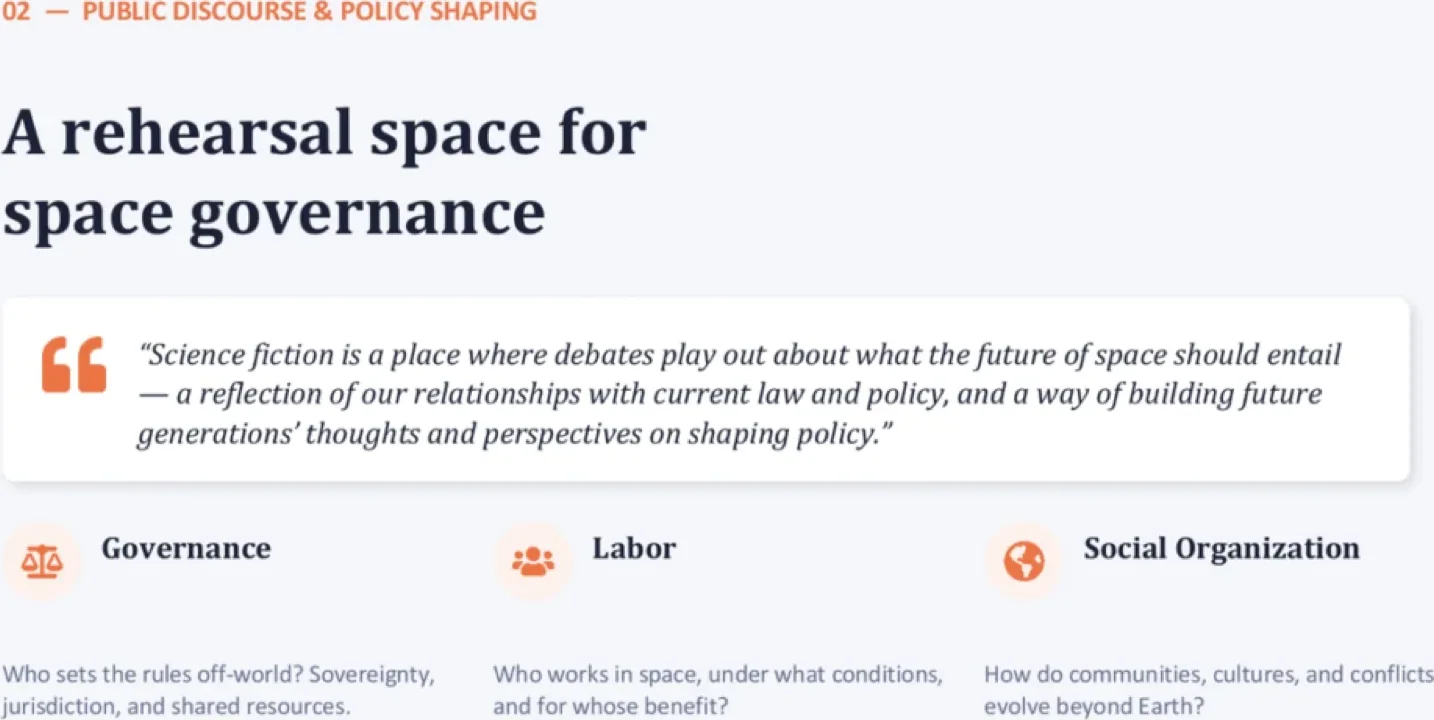
That gap is not a weakness of fiction — it is its function. Fiction is a low-cost, high-speed prototype of the future. It lets a civilization rehearse ideas — orbital habitats, asteroid mining, interplanetary law, alien contact — long before a single dollar is spent building them. By the time the engineers arrive, the public has already decided the destination is worth wanting.
And "worth wanting" matters enormously for civilian space development specifically, because civilian space, unlike military space, cannot be justified by secrecy or threat. It has to be justified by desire. Someone has to want to go. Someone has to want to pay. Fiction is one of the most effective machines humanity has ever built for manufacturing that desire.
The commercial evidence
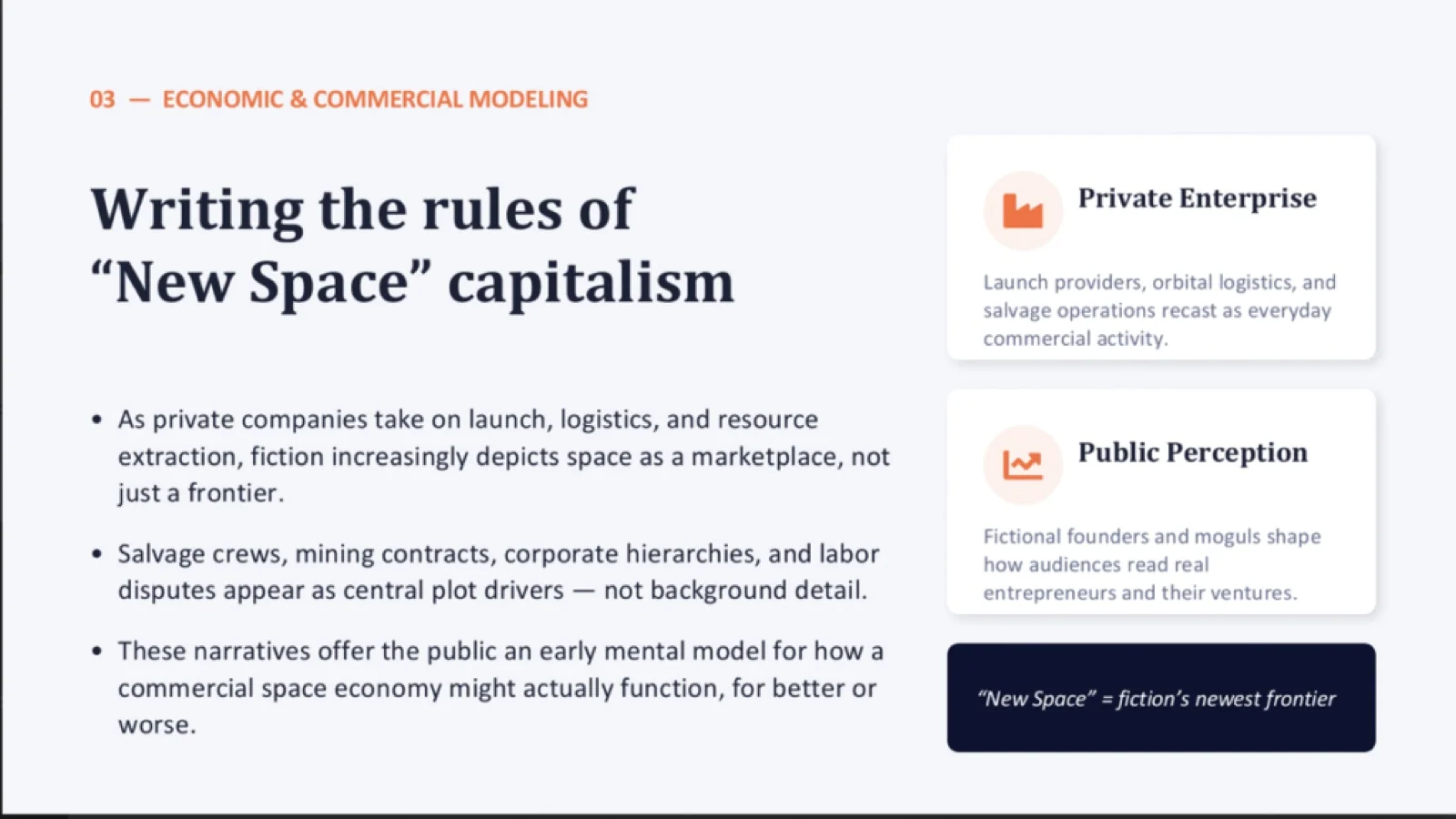
Look at who is building rockets today. Elon Musk has spoken openly about being shaped by The Hitchhiker's Guide to the Galaxy and by golden-age science fiction's assumption that humanity is, by default, a spacefaring species. Jeff Bezos has cited Star Trek as a formative influence and has said explicitly that Blue Origin's long-term vision — millions of people living and working in space — comes from that same well of imagination.
These are not incidental biographical details. These are the founders of two of the most consequential civilian space companies on Earth, both naming fiction as the origin point of their ambition. When science fiction imagines settlement, industry follows with hardware.
A note of honesty

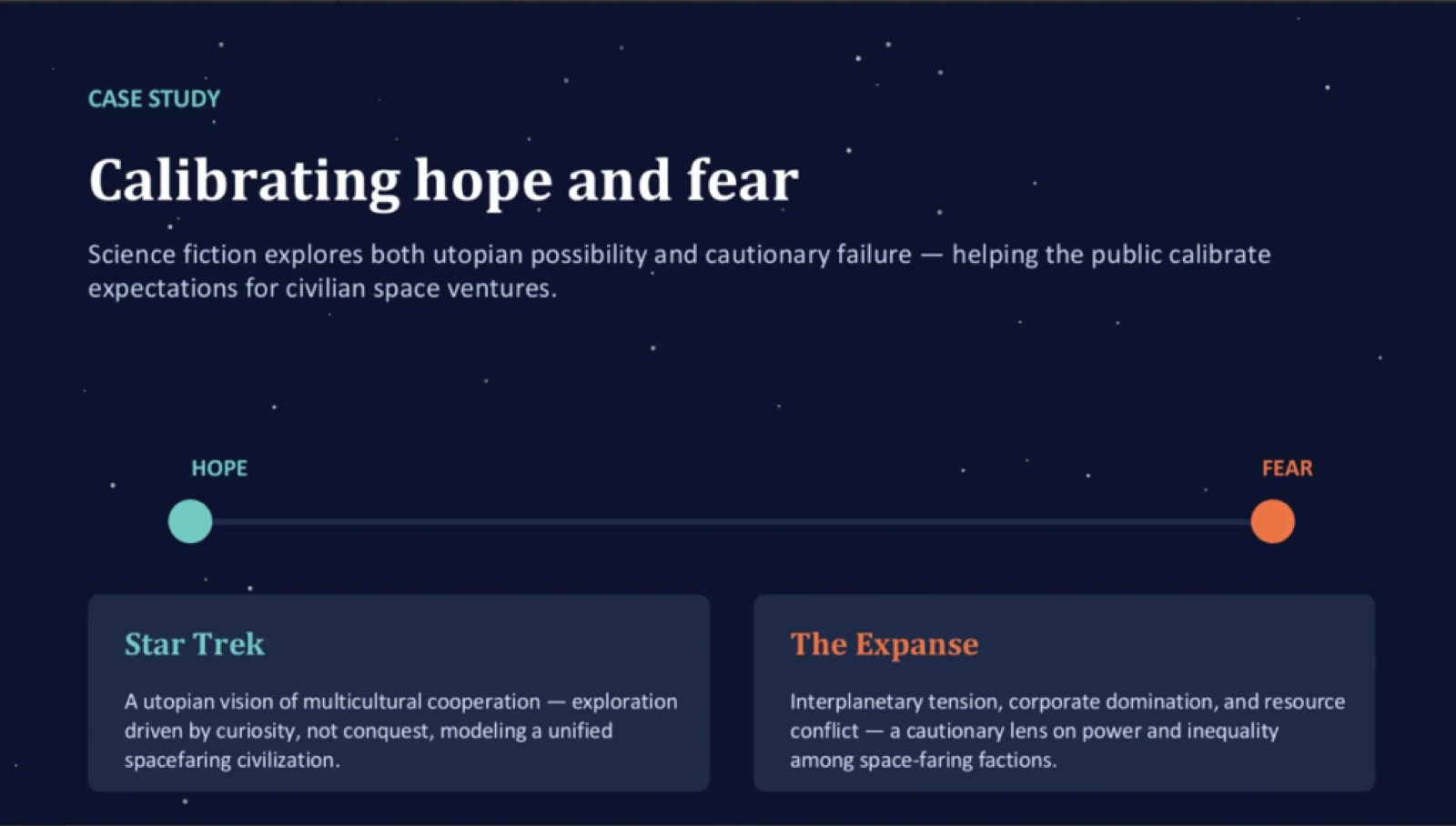
Now, I would be doing this topic a disservice if I only praised fiction. Science fiction can also mislead. It compresses decades of engineering into two hours of film. It gives us artificial gravity with no explanation, faster-than-light travel with no mechanism, and colonies that appear fully formed with no mention of the radiation, the logistics, or the cost. This creates a public that sometimes expects Mars next year and is disappointed when it takes another decade.
So fiction's role is not to replace engineering, or to promise timelines. Its role is to open the door of plausibility — to make an idea feel normal, achievable, and worth funding — and then step back and let science do the harder, slower work of making it real.

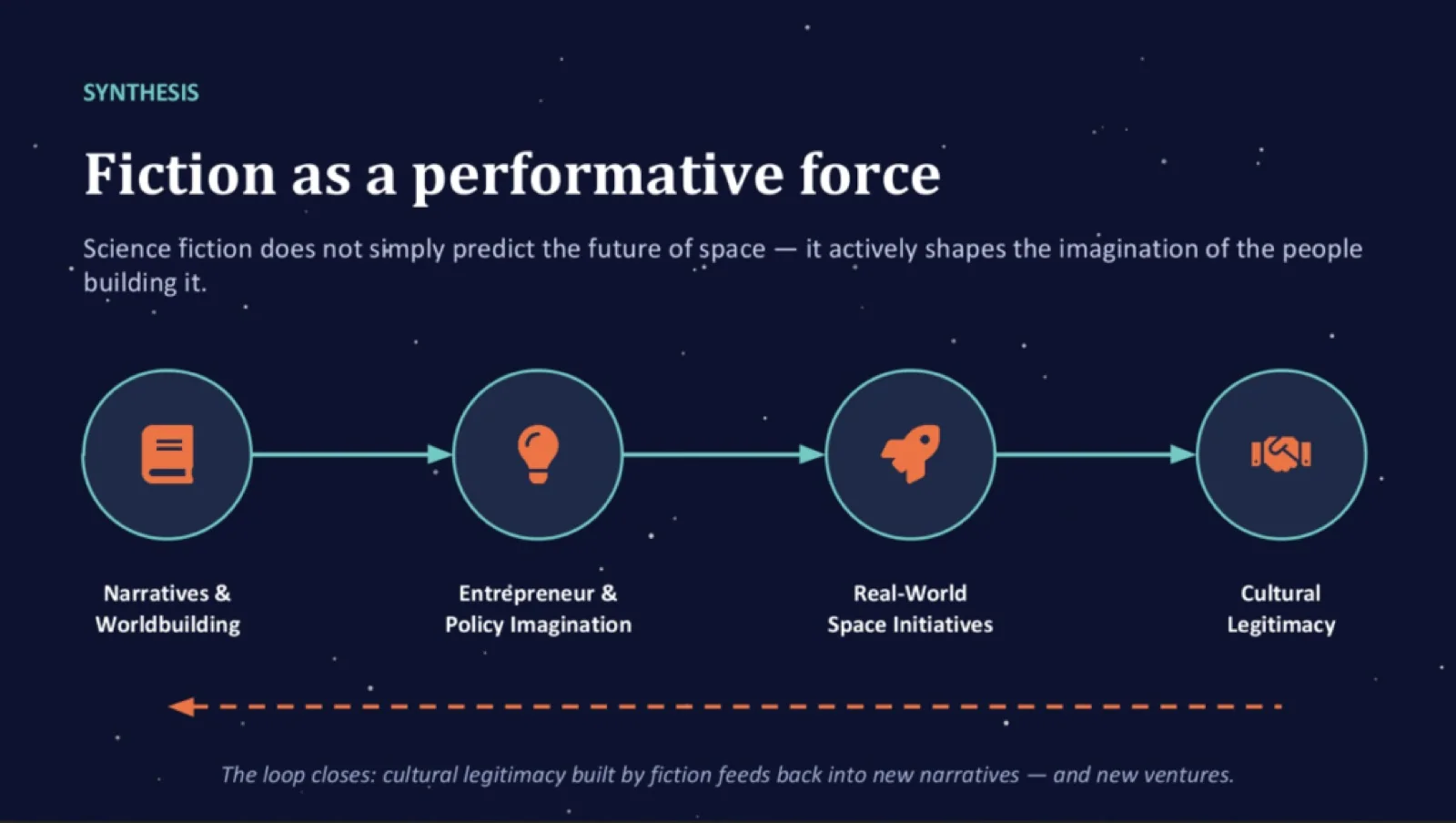
So does modern science fiction have a role in accelerating civilian space development? Yes — but the honest answer is not that fiction builds rockets. It is that fiction builds the appetite for rockets to be built.
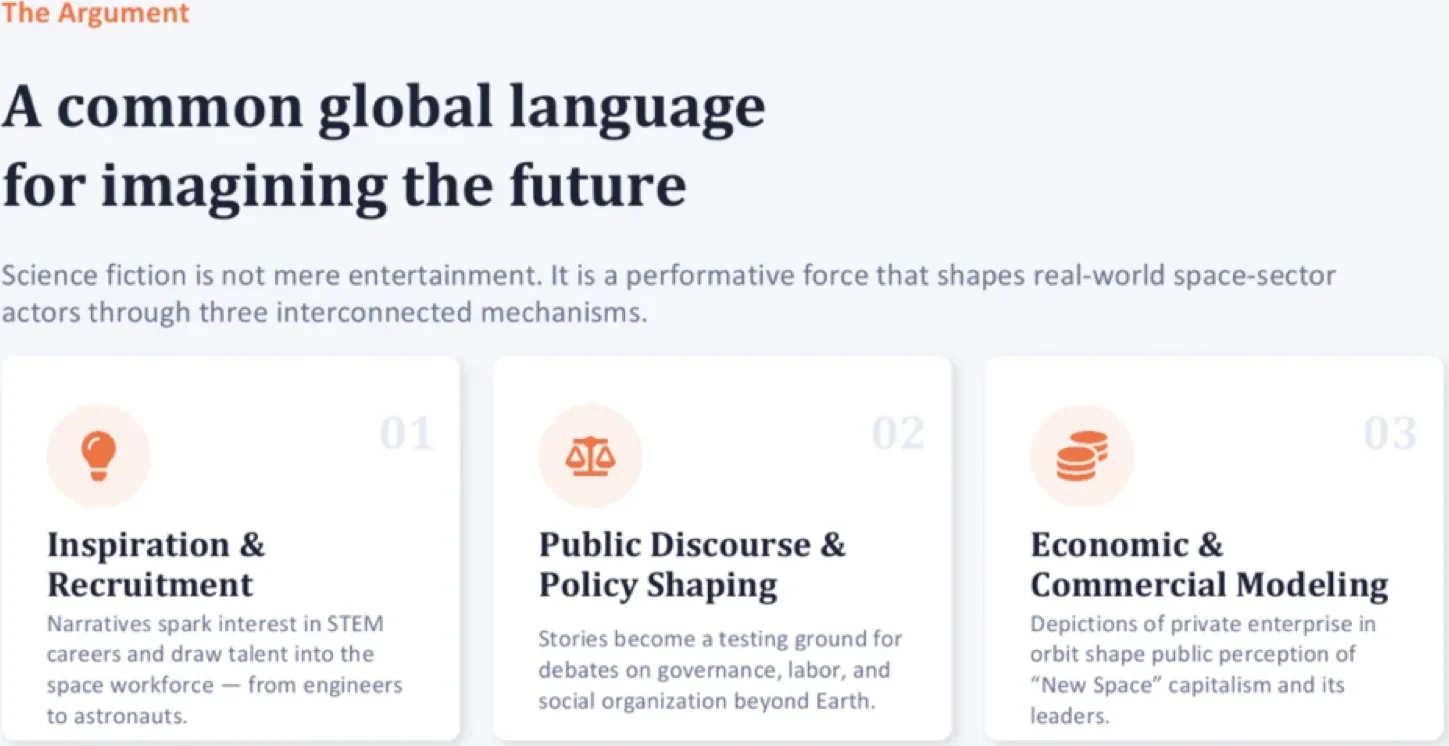
It recruits the engineers who will spend a career solving the mathematics of orbital mechanics. It recruits the investors who will risk capital on ideas with no immediate return. It recruits the public whose support, whether through taxes or ticket sales, keeps civilian space programmes alive between one launch and the next. Every civilian space achievement we celebrate — from the first commercial satellite to the first private astronaut — was, at some point, somebody's favorite scene in a book or a film before it was a line item in a budget.
So I will leave you with this. The next great leap in civilian space — a lunar settlement, an asteroid mining operation, a city on Mars — will not begin in a boardroom or a launch facility. It will begin, as it always has, in someone's imagination: a child reading a novel, a teenager watching a film, a young engineer who decides that the impossible thing on the screen is worth a career trying to make real.