How Michel Gondry Redefined Advertising, Music Videos, and the Art of the Impossible
If you’re remaking “Come Into My World”—widely considered one of the greatest music videos ever made—there’s really only one person who should be behind the camera.
Chanel understood that.
In an industry where nostalgia is often reduced to hollow imitation, the French luxury house made a choice that felt less like a marketing decision and more like a cultural necessity. They called Michel Gondry. Not a facsimile. Not a director who could approximate his style. They went to the source.
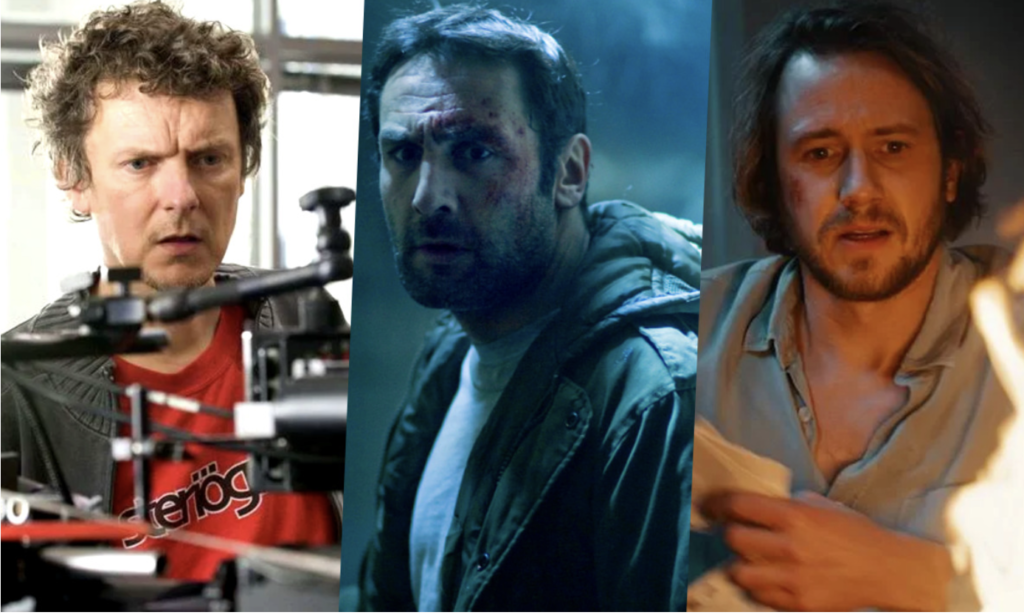
For fans of his work—Eternal Sunshine of the Spotless Mind, The Science of Sleep, and legendary music videos for Björk, The White Stripes, and Daft Punk—this wasn’t just a campaign. It was a homecoming. And it served as a reminder that Gondry’s influence, spanning three decades, has never been confined to any single medium. From music videos to feature films to some of the most inventive commercials ever made, Gondry has built a career on a simple, radical principle: show the audience how you did it, and they’ll love you for it.
This is the Gondry Factor.
The Formative Years: Music Videos as Playground
Before Gondry became a celebrated filmmaker, he was a drummer in a French rock band. When the band dissolved, he fell into directing music videos almost by accident—but his background in drumming gave him something crucial: an innate sense of rhythm, timing, and repetition that would come to define his visual language.
His early work for Björk established him as a singular talent. The video for “Human Behaviour” (1993) introduced audiences to a world built from painted backdrops, oversized props, and a distinctly handmade aesthetic. It was surreal, but it was also tangible. You could see the craft. The seams weren’t hidden; they were celebrated.
That ethos became Gondry’s signature. Where other directors pursued photorealism and invisible effects, Gondry wanted you to marvel at the construction of the image. His videos for “Army of Me” (Björk), “Around the World” (Daft Punk), and “Fell in Love with a Girl” (The White Stripes) were exercises in pure, practical invention.
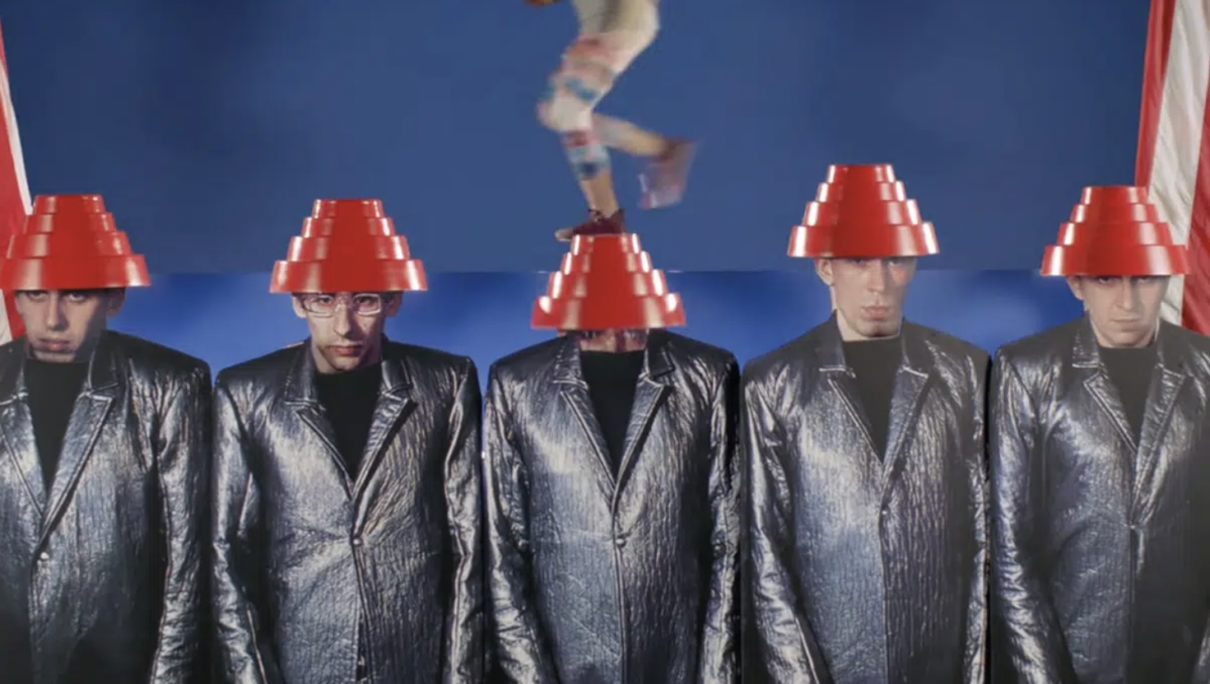
“Around the World” (1997) remains a landmark: a single-concept video executed with mathematical precision, featuring four groups of dancers representing different instrumental tracks, each confined to a specific section of the frame. No CGI. Just choreography, repetition, and a camera that never moves. It won Gondry his first Grammy and cemented his reputation as a director who could turn a budget into a playground.
But it was “Come Into My World” (2002) that pushed the concept even further. A single, unbroken four-and-a-half-minute take on a real Paris street corner, with Kylie Minogue walking the same loop multiple times as Gondry’s team executed a meticulously choreographed in-camera repeat effect. No CGI shortcuts. Just pure, practical filmmaking genius. The result was a video that felt impossible—and yet, there it was, achieved through planning, patience, and an almost obsessive attention to detail.
Crossing Over: From Music Videos to Features
Gondry’s transition to feature films was never guaranteed. Music video directors have historically struggled to translate their visual style into long-form storytelling. But Gondry brought something different: not just a visual vocabulary, but a worldview.
His debut, Human Nature (2001), written by Charlie Kaufman, showed promise. But it was their second collaboration—Eternal Sunshine of the Spotless Mind (2004)—that announced Gondry as a major cinematic voice. The film, which won Kaufman an Academy Award, is often described as a masterpiece of screenwriting, but its visual language is pure Gondry. The dissolving memories, the collapsing houses, the characters shrinking into childhood—all achieved through practical effects, in-camera trickery, and a deep understanding of how to visualize interior states.
Eternal Sunshine wasn’t just a critical success. It became a cultural touchstone, and it proved that Gondry’s brand of handmade surrealism could carry emotional weight. The film’s enduring popularity—it frequently appears on lists of the greatest films of the 21st century—is a testament to Gondry’s ability to ground technical invention in genuine human feeling.
He followed it with The Science of Sleep (2006), a deeply personal film that blurred the line between dreams and waking life. Shot on elaborate cardboard-and-felt sets, it was Gondry at his most unguarded—a film that felt less like a commercial project and more like a diary entry. It didn’t replicate the commercial success of Eternal Sunshine, but it cemented his reputation as an artist who followed his own instincts.
The Advertising Years: Craft as Commerce

While Gondry was building his filmography, he was also quietly reshaping the landscape of television advertising. In the world of commercials, Gondry became the gold standard—the director that brands hired when they wanted to signal that they valued craft over convention.
His work for Smirnoff, particularly the iconic “Tea Partay” campaign (2007), is often cited as one of the greatest commercials of all time. The spot, which depicted a group of impeccably dressed young men playing croquet and sipping tea while a rap track played, was a masterclass in subverting expectations. But it was Gondry’s earlier work for Smirnoff—the “Sea” and “Jellyfish” spots—that showcased his signature practical effects. Jellyfish made from umbrellas. Oceans made from fabric. Every element was physical. Every effect was real.
His Levi’s commercial “Drugstore” (1995) became legendary in advertising circles: a continuous take following a young man through a drugstore, with the camera seemingly traveling through a mirror and emerging into a parallel world. Again, all in-camera. No digital tricks. Just clever staging, precise timing, and a refusal to take the easy route.
For Coca-Cola, Gondry created “Happiness Factory” (2006), a fantastical journey inside a vending machine that became one of the most awarded commercials of the decade. The spot was animated, yes, but it retained Gondry’s signature texture and invention—a world built from gears, pulleys, and an almost Rube Goldberg-esque sense of machinery.
What set Gondry’s advertising work apart was that he never treated commercials as lesser than his music videos or films. He approached them with the same rigor, the same commitment to practical invention, the same desire to make the audience smile at the cleverness of the construction. In doing so, he elevated the form. Brands weren’t just buying his name; they were buying into a philosophy.
The Philosophy: Why Practical Effects Still Matter
Across his entire career—music videos, features, commercials—Gondry has remained stubbornly loyal to one idea: practical effects are more magical than digital ones.
In an era where CGI can create anything, Gondry’s work feels almost defiantly analog. When you watch one of his videos or commercials, you’re not marveling at what computers can do. You’re marveling at what people can do. The joy comes from knowing that what you’re seeing was achieved with cardboard, paint, string, and an extraordinary amount of planning.
This philosophy extends to his approach to storytelling. Gondry’s work is often about memory, imagination, and the creative act itself. His characters are dreamers, inventors, people who build worlds from scraps. In that sense, his films are about the same thing his commercials are about: the beauty of making something by hand.
There’s a political dimension to this, too. In a media landscape saturated with AI-generated imagery and algorithmic content, Gondry’s insistence on the tangible feels increasingly radical. His work says: look at what humans can do when they collaborate. Look at what happens when you give talented people time, space, and permission to experiment.
The Chanel Campaign: A Full-Circle Moment
Which brings us back to Chanel. When the luxury house decided to revisit “Come Into My World” for their 25 handbag campaign, they could have taken the easy route. They could have hired a contemporary director to produce a slick homage. They could have used digital effects to simulate Gondry’s style. They could have traded on nostalgia without honoring its source. Instead, they did something that only a brand confident in its own legacy would do: they brought Gondry back.
The new campaign recreates the magic of the original on a soundstage dressed as a Parisian street. Margot Robbie steps into the looping intersection. Kylie Minogue makes a quiet cameo from a second-floor window. And the visual trickery—the layering, the repetition, the impossible choreography—remains practical. In-camera. Real.
For Gondry, it was a reunion with a project that defined his career. “I’ve been dreaming about Kylie for 25 years,” he told Vogue. “So I finally found a way to see her again.”
For fans, it was confirmation that Gondry hasn’t lost his touch. The same meticulous planning, the same handmade invention, the same joy in revealing the trick—it’s all still there.
And for Chanel, it was a statement. In a world of disposable content, they chose to invest in craft. They chose the director who couldn’t be replaced by an algorithm. They chose the Gondry Factor.
Legacy: The Gondry Factor Endures
Michel Gondry’s career is unusual. He’s a director who has worked at the highest levels of music, film, and advertising without ever compromising his aesthetic. He’s won Grammys and an Oscar. He’s made commercials that people remember decades later. He’s created images—the looping Kylies, the dancing skeletons in “Fell in Love with a Girl,” the dissolving memories of Eternal Sunshine—that are permanently etched into the cultural consciousness.
But perhaps his greatest achievement is that he’s made audiences think about how things are made. In an age of seamless digital effects, Gondry’s work reminds us that there’s magic in the seams. That a visible join can be more beautiful than an invisible one. That the pleasure of watching something is multiplied when you understand—and appreciate—the work that went into building it.
The Gondry Factor isn’t just style. It’s a philosophy. And as long as there are brands willing to invest in craft, audiences hungry for invention, and directors willing to do things the hard way, it will never go out of style.