Behind the Headline: How the Pentagon Mastered the Art of Naming War
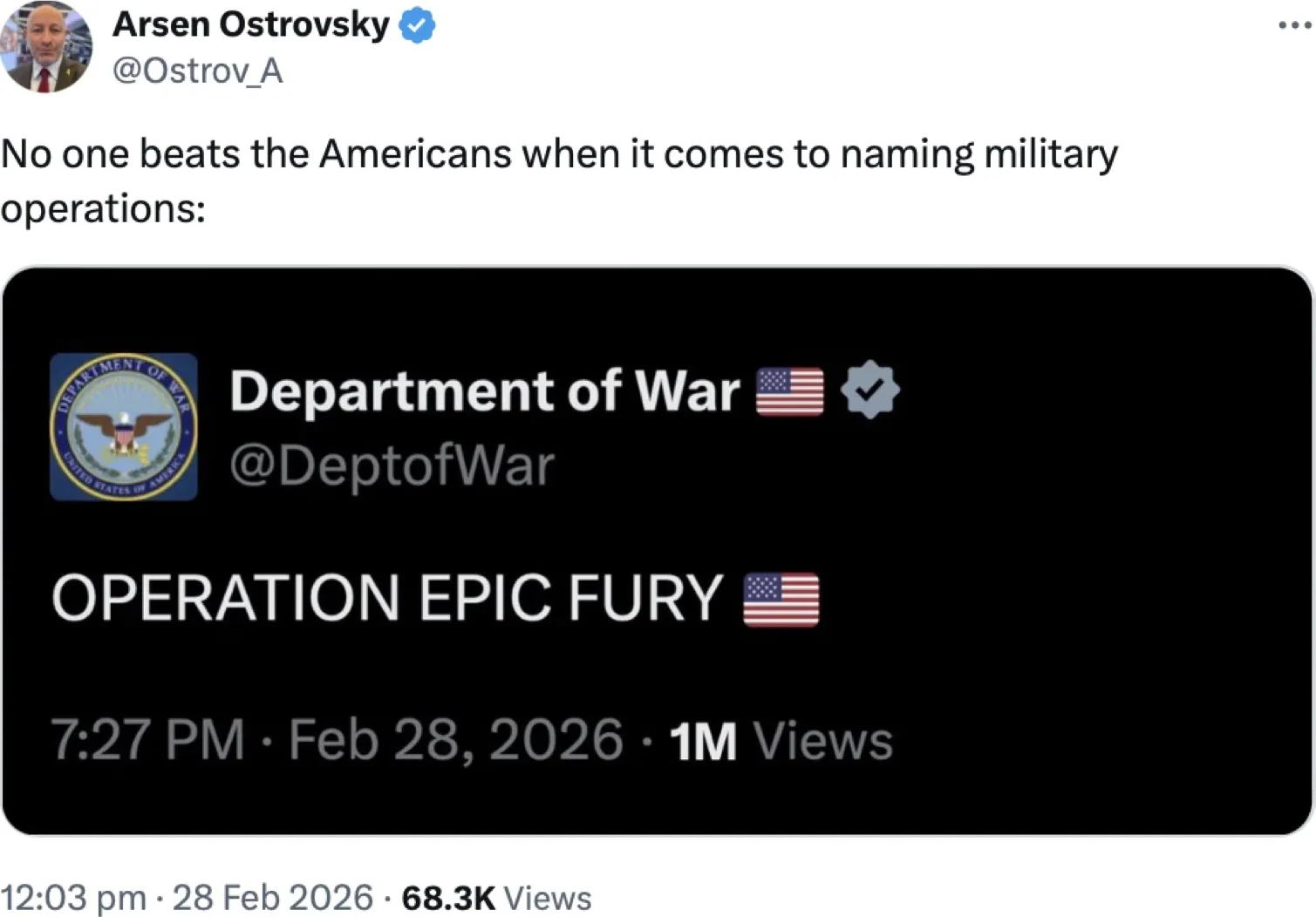
What’s in a name? When it comes to modern military intervention, the answer is: everything.
Since 1989, the United States military has approached the naming of major operations not as an administrative afterthought, but as a strategic weapon in its own right. From the jungles of Panama to the mountains of Northern Iraq, the names chosen for combat operations have been carefully calibrated to shape perception before a single shot is fired.
The most infamous example remains Operation "Just Cause" (Panama, 1989)—a name so overtly self-justifying that it became a case study in the power of political framing. But it was far from an isolated incident.
Consider the humanitarian spin of Operation "Provide Comfort" (Turkey/Iraq, 1991), which escorted aid to Kurds fleeing Saddam Hussein’s violence. Or the democratic overtures of Operation "Uphold Democracy" (Haiti, 1994), which framed military intervention as an act of political restoration. These were not accidental choices; they were calculated signals designed to manage domestic audiences, reassure international allies, and define the moral stakes of the conflict before the enemy could.
As Major General Charles McClain, then-Chief of Public Affairs for the U.S. Army, put it bluntly: "The perception of an operation can be as important to success as the execution of that operation."
The First Bullet is a Word
Recently, we shared insights on this topic with the Russian daily New Izvestia for their piece, "The Name of War: Who and How Military Operation Names Are Actually Invented." Our contribution highlighted a key shift in military doctrine—not just in the U.S., but among global powers like Israel—where information warfare has moved from the periphery to the forefront of strategy.
In this new doctrine, the name of an operation is treated as the "first bullet." It is fired long before troops mobilize, designed to penetrate the consciousness of the public and establish the dominant narrative. Whether the goal is to evoke justice, offer hope, promise comfort, or demand endurance, the name sets the psychological battlefield upon which the physical war will be fought.
This approach, refined in the post-Cold War era, represents a delicate balancing act. Planners must weigh operational security (avoiding names that reveal too much) against messaging power (choosing names that align perfectly with policy goals).
Words Shape Reality
The lesson is clear: in modern conflict, words shape reality as much as actions do. A conflict’s legitimacy, its staying power in the public eye, and its place in the history books are all influenced by the two or three words chosen to represent it.
By labeling an invasion "Just," you imply that opposition is unjust. By naming a campaign "Enduring Freedom," you frame any timeline as insufficient and any sacrifice as noble. The name is not just a label; it is a thesis statement for the war itself.